

Data-driven diagnosis of operational performance issues
Helping industrial clients troubleshoot issues and improve efficiency of existing processes.
When Operational Data isn’t Delivering Answers
Many treatment plants generate large volumes of data, but still struggle to understand what is really happening. Common issues include:
Underperforming processes with no clear root cause
Rising energy or chemical costs without explanation
Unstable or inconsistent system behaviour
Conflicting interpretations between operators, engineers, and vendors
When this happens, decisions are often made on assumption rather than evidence, leading to missed opportunities or misdirected interventions.
Independent Data-Driven Process Diagnosis
Promethean Engineering provides independent analysis of operational data to establish a clear, trusted view of system performance.
We focus on understanding how the system is really behaving and not just what the headline metrics suggest.
By combining engineering judgement with data analytics, we separate:
Real process behaviour from measurement noise.
Operational issues from design limitations.
Short-term variability from long-term trends.
This creates clarity where uncertainty previously existed.
How We Work
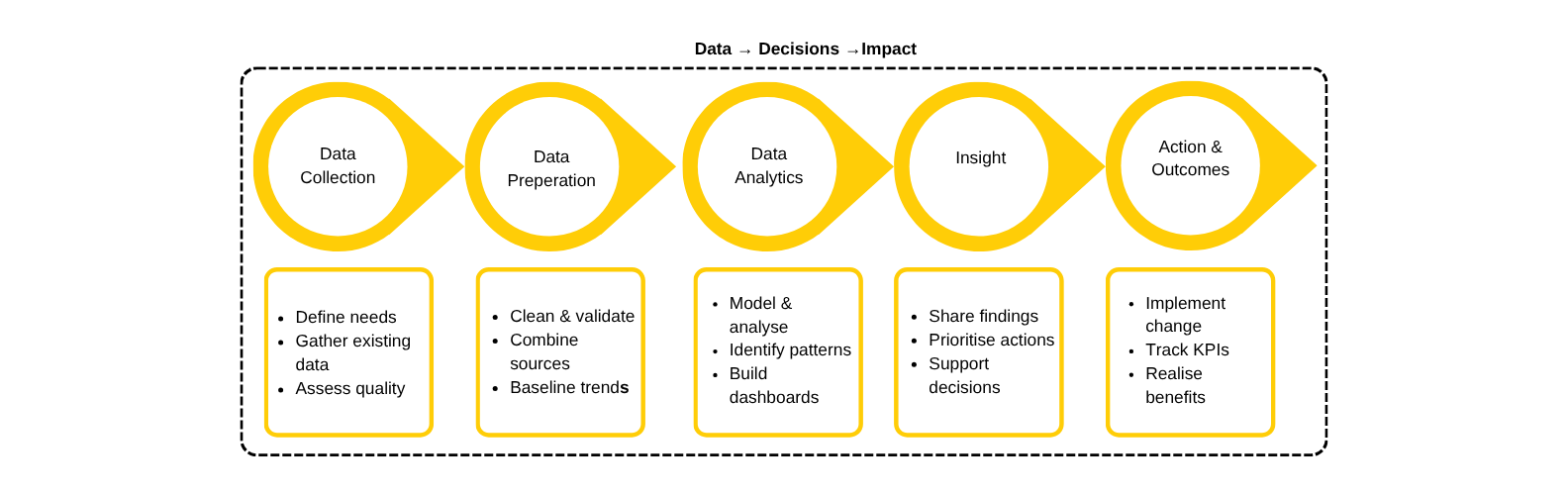
Our approach is structured but pragmatic, using available plant data to build a reliable understanding of performance using a three stage approach. We review with you the key findings resulting from each stage and paths forward before moving to the next:
Phase 1 - What happened or is happening?
Establish a clean operational baseline from available data.
Identify leading indicators of instability and inefficiency.
Diagnose root causes across process, control, and infrastructure.
Phase 2 - What can we do?
Quantify performance improvement opportunities.
Phase 3 -What are we doing and how do the improvements compare to the baseline?
Support implementation of targeted operational changes.
We do not rely on generic optimisation models and every analysis is grounded in the actual behaviour of your system.
This approach is most effective where sufficient operational data exists. Where data is limited, we can first support data collection or structuring improvements. You can check the suitability of your data for analysis with this checklist.
NDA → Data Review → Analysis → Findings → Recommendations → Implementation → Monitoring
What This Enables
This approach provides:
Clear understanding of why performance issues are occurring.
Reduced uncertainty in operational and technical decision making.
Identification of hidden cost drivers (energy, chemicals, downtime).
Evidence based prioritisation of improvement actions.
Confidence in whether further capital investment is required.
Where this is Typically Applied
We are typically engaged where:
Operational data exists but is not generating actionable insight.
Process performance is inconsistent or deteriorating.
There is uncertainty around the effectiveness of current control strategies.
Pilot systems or new technologies are not performing as expected.
Decisions need to be made on optimisation vs further investment.
Industries & Process Applications
We apply this approach across a range of water and industrial treatment systems, including:
Industrial wastewater treatment (food & beverage, manufacturing)
Municipal water and wastewater treatment plants
Water reuse and recycling systems
Cooling tower and utility water systems
Membrane-based processes (RO, UF, MBR)
Biological treatment systems (including anaerobic digestion)
Our work is not limited to a specific technology. Wherever operational data exists, there is an opportunity to better understand system behaviour and improve performance.
Example: RO Feasibility & Performance Diagnosis
Cooling Tower Water Reuse – RO Feasibility & Control Optimisation
An industrial cooling facility in Jebel Ali was evaluating RO treatment of cooling tower blowdown to reduce high cost desalinated make up water. A pilot system appeared to be failing due to unstable performance and rising operating pressure.
Promethean Engineering applied data analytics to identify the true root cause, distinguishing operational instability from perceived membrane failure. The analysis showed that chemical dosing variability and inadequate pretreatment were driving performance issues. Control changes to the dosing system were proposed and then validated.
Result: RO reuse was validated as viable with corrected control strategy, avoiding premature rejection of the technology and supporting progression to FEED stage design.
Benefits For Your Organisation
Cost reduction by proactively identifying and addressing inefficiencies before they escalate (e.g., unplanned downtime, overdose of chemicals).
Risk mitigation through early detection of potential asset failures or quality breaches.
Enhanced sustainability via lower consumables usage, energy optimisation and improved resource recovery.
Better decision making by transitioning from gut feel or historical precedent to data driven insight.
Let’s Discuss Your System
If you have operational data but limited clarity on performance, we can help you identify where issues are occurring and what actions will deliver the greatest impact.
No obligation — just a practical discussion of your current situation